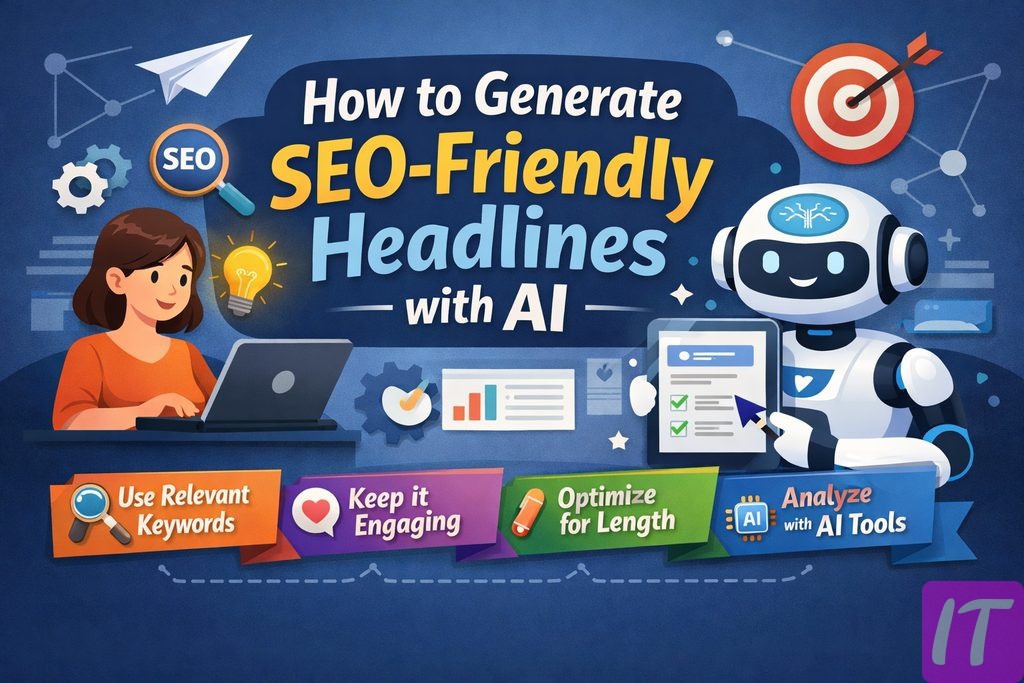
This guide explains how to use AI to create better blog headlines by combining search intent, keyword relevance, and click-through potential in a cleaner workflow. This version is written for clear search intent, better readability, and a softer monetization-friendly structure.
Headline performance depends on more than wording alone. Content quality, search competition, and page experience also influence results.
A strong headline does two jobs at once
SEO-friendly headlines are not just about adding a keyword. A strong title tells search engines what the page is about and gives readers a clear reason to click. When either part is missing, the headline becomes weaker.
That is why the best AI-generated titles are not always the most dramatic ones. In many cases, the winning headline is the one that feels the clearest, most useful, and most aligned with the searcher’s goal. If the search intent is educational, the title should sound helpful. If it is comparative, the title should signal choice and evaluation. If it is step-by-step, the title should promise a process.
AI is excellent at generating multiple headline patterns quickly. The human job is to choose the one that best matches real search intent and editorial trust.
How to prompt AI for better headlines
If the prompt only contains the keyword, the results are usually repetitive and generic. A better prompt includes the audience level, the search intent, the article type, the preferred tone, and the number of variations needed.
For example, instead of saying “give me titles for AI blog writing,” a better prompt is: “Generate 15 clear SEO-friendly headlines for beginners, avoid clickbait, keep the keyword natural, and give me how-to, list, and question-style variations.” That one change usually improves quality immediately.
It also helps to ask for headline families instead of one list. Request informational headlines, commercial-intent headlines, and CTR-focused but non-clickbait headlines separately. Comparing groups makes the final choice easier.
Useful headline formulas for different intent types
Different searches need different headline structures. How-to content often benefits from “How to…” or “Step-by-Step” formats. Resource pages may work better with “Best,” “Top,” or “Guide” frameworks when the article truly compares or curates. Educational content can use “What is,” “Why,” or “Common mistakes” structures.
The danger comes when writers use the same formula everywhere. Not every article should be a “best” list. Not every title should include a year. The right structure depends on what the page actually delivers.
AI can help explore these patterns quickly, but the best final title is usually the one that sounds natural, reflects the content honestly, and meets the reader where they are in the decision process.
How to improve click-through rate without sounding manipulative
Many writers want stronger click-through rates and end up leaning into hype. The problem is that exaggerated titles may increase curiosity while lowering trust. That tradeoff is rarely worth it for long-term content brands.
A better path is curiosity through specificity. Instead of using phrases like “secret method” or “guaranteed results,” use a title that makes the value clear. Readers are more likely to click when they understand what they will gain and believe the article will actually deliver it.
This is especially important for AdSense-friendly publishing. Pages that feel transparent and useful build more sustainable trust. AI can generate sharper titles, but the editor should still remove inflated language before publishing.
A simple testing workflow for better titles
The easiest way to improve headline quality is to stop looking for the perfect title on the first try. Ask AI for 15 to 20 options. Then divide them into three groups: too generic, too aggressive, and balanced. Most usable titles end up in the third group.
From there, compare the top three against the article outline. Which one matches the content most honestly? Which one sounds strongest without overselling? Which one would a real reader click because it feels helpful, not sensational?
That small review process turns AI into a useful headline partner. It also reduces the chance of publishing titles that either undersell the page or overpromise what it can deliver.
Frequently Asked Questions
How long should an SEO headline be?
There is no perfect number for every case, but concise, clear headlines that communicate value quickly tend to perform better.
Can AI-generated headlines be used as-is?
Sometimes, but headline quality improves when humans filter for intent, clarity, and brand tone.
What is the biggest headline mistake?
Forcing the keyword into a title that sounds unnatural or misleading.